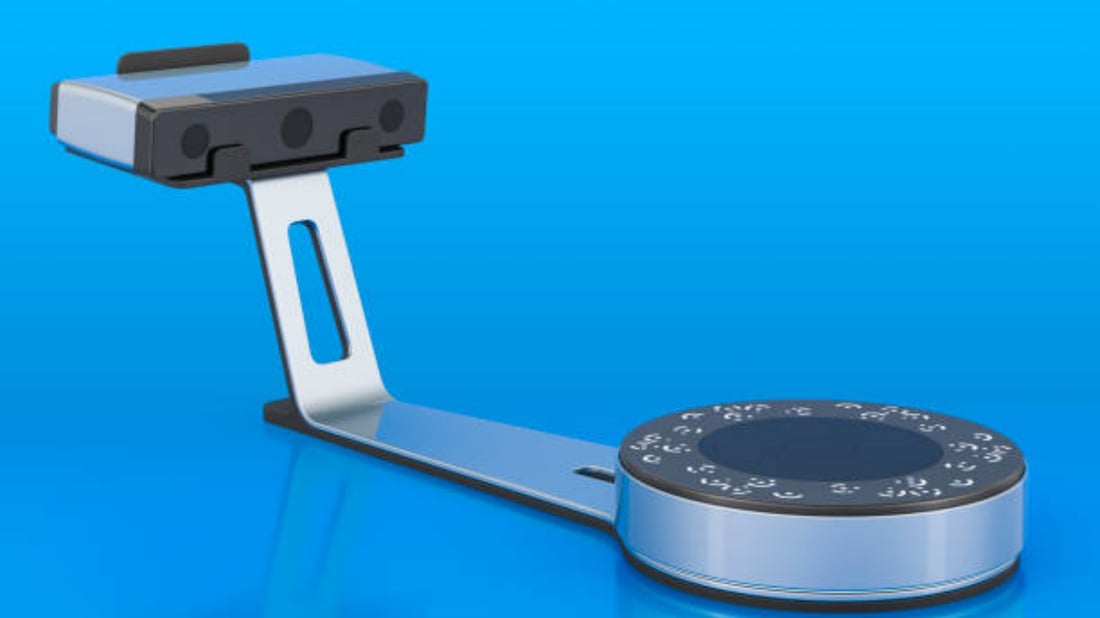
High precision 3D scanning vibrometers are advanced instruments designed to capture detailed vibration data across multiple dimensions. Unlike traditional vibrometers that measure vibration at a single point or axis, these devices leverage laser scanning technology to detect vibrations with exceptional accuracy in three-dimensional space. This capability allows engineers and researchers to analyze complex vibrational modes and structural behaviors with unparalleled detail.
Core Technology Behind 3D Scanning Vibrometers
The core of a high precision 3D scanning vibrometer combines laser Doppler vibrometry with sophisticated scanning mechanisms. By directing multiple laser beams rapidly over a surface, the device measures vibration amplitude and frequency at numerous points in real time. Key components include precision lasers, high-speed scanners, and sensitive interferometric detection systems, all engineered for stability and high spatial resolution, making these instruments essential for precise vibrational analysis.
Applications in Structural Health Monitoring
High precision 3D scanning vibrometers play a pivotal role in structural health monitoring. They enable non-contact, full-field vibration measurements of bridges, aircraft wings, and mechanical components. By detecting minute vibrational changes, these vibrometers help identify structural damage, fatigue, or material degradation early, enhancing safety and reducing maintenance costs. The 3D scanning capability facilitates comprehensive surface analysis that traditional methods cannot match.
Advantages Over Conventional Vibration Measurement Techniques
Compared to accelerometers and single-point vibrometers, high precision 3D scanning vibrometers offer significant advantages. They provide non-invasive, high-resolution, full-surface mapping without physical contact, which eliminates mass-loading effects that can alter vibration characteristics. The rapid scanning ability captures transient vibrations and complex modal shapes, offering a deeper understanding of dynamic systems, which is critical in research and industrial quality control.
Role in Aerospace and Automotive Engineering
In aerospace and automotive industries, precision vibration data is essential for optimizing designs and ensuring reliability. High precision 3D scanning vibrometers allow engineers to visualize vibrational patterns on aircraft fuselages, engine components, and vehicle chassis. These insights lead to improved material selection, enhanced structural damping, and noise reduction, resulting in more efficient, quieter, and safer vehicles.
Integration with Finite Element Analysis (FEA)
The detailed vibrational data acquired by high precision 3D scanning vibrometers are invaluable for validating and refining finite element analysis models. By comparing measured modal shapes and frequencies with simulated results, engineers can identify discrepancies and adjust material properties or boundary conditions in their models. This integration ensures that simulations closely replicate real-world behavior, accelerating design iterations and reducing prototype costs.
Biomedical Research and Medical Device Testing
Beyond industrial applications, high precision 3D scanning vibrometers are increasingly employed in biomedical research. They measure subtle vibrations in biological tissues and medical devices, such as hearing aids or prosthetics. This precise characterization aids in understanding biomechanical properties and improving device performance, contributing to advancements in personalized medicine and rehabilitation technologies.
Challenges in Implementing High Precision 3D Scanning Vibrometers
Despite their capabilities, implementing high precision 3D scanning vibrometers presents challenges. These include managing environmental factors such as vibrations, temperature variations, and surface reflectivity, which can affect measurement accuracy. Additionally, the complexity of data acquisition and processing demands specialized expertise and software, requiring organizations to invest in training and infrastructure to fully leverage these tools.
Future Trends and Innovations
The future of high precision 3D scanning vibrometry is promising, with ongoing innovations focusing on increased scanning speed, improved resolution, and enhanced portability. Advances in laser technology and computational algorithms will enable even more detailed vibrational analyses in real time. Integration with artificial intelligence for automated defect recognition and predictive maintenance is on the horizon, broadening the impact across various industries.
Conclusion: The Impact on Precision Measurement and Analysis
High precision 3D scanning vibrometers represent a significant advancement in vibration measurement technology. Their ability to provide accurate, full-field, and non-contact vibrational data transforms how engineers and scientists analyze dynamic systems. From structural health monitoring to biomedical applications, these instruments improve safety, efficiency, and innovation. As technology evolves, their adoption is expected to grow, reinforcing their importance in high-precision measurement and quality control.
Quote Inquiry
contact us