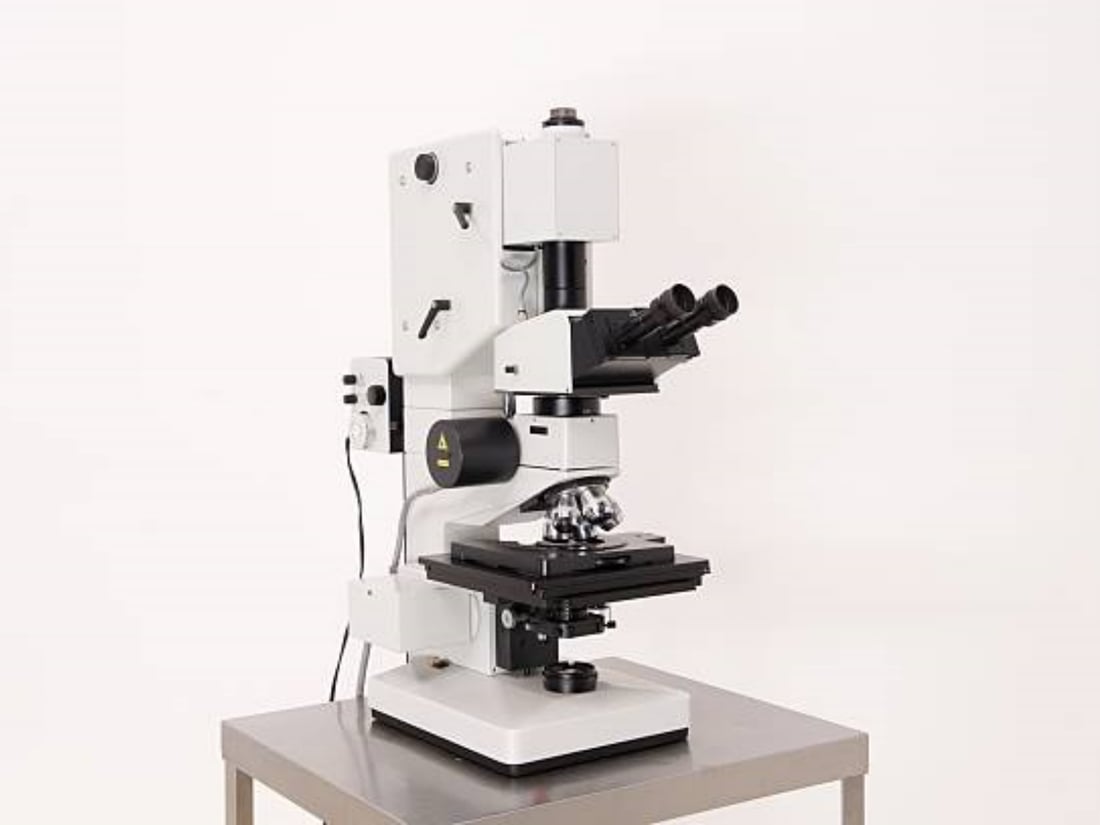
Microscopic laser vibration sensors are highly sophisticated devices designed to detect and measure vibrations at extremely small scales using laser technology. These sensors employ laser interferometry or laser Doppler vibrometry to capture vibrational signals with exceptional precision. Their compact size and sensitive measurements make them indispensable in fields requiring detailed vibrational analysis, including microelectronics and nanotechnology.
Working Principle Behind Laser Vibration Sensing
At the core of a microscopic laser vibration sensor is its reliance on laser beams and their interactions with vibrating surfaces. The sensor emits a focused laser beam onto the object, and the reflection undergoes subtle changes dependent on surface vibrations. Using interferometric techniques, these minute shifts in the reflected laser wave can be converted into precise vibration data, enabling accurate characterization of vibrational frequencies and amplitudes.
Advantages Over Conventional Vibration Sensors
Compared to traditional piezoelectric or capacitive vibration sensors, microscopic laser vibration sensors provide non-contact measurement capabilities. This eliminates the errors and damping effects caused by physical attachments, preserving the integrity of micro-scale structures. Additionally, their high spatial resolution and ability to detect ultra-low amplitude vibrations give them an edge in research and industrial applications where precision is paramount.
Material Science Applications
In material science, microscopic laser vibration sensors serve to analyze the mechanical properties of novel nanomaterials and thin films. Understanding vibrational modes and dynamics at the micro and nano levels aids in tailoring materials with desired strength and flexibility. These sensors play a pivotal role in quality control and characterization during the manufacturing of advanced materials.
Use in Microelectromechanical Systems (MEMS)
MEMS devices often feature components that respond to or generate vibrations. Microscopic laser vibration sensors enable real-time monitoring of these vibrations without physical contact, ensuring the longevity and operational accuracy of MEMS devices. This capability supports enhanced device design and troubleshooting in industrial and biomedical MEMS applications.
Role in Structural Health Monitoring
For complex microstructures, especially in aerospace and precision engineering, vibration monitoring is critical to detect faults and prevent failures. Microscopic laser vibration sensors offer a powerful tool for structural health monitoring by providing detailed vibrational profiles, enabling early detection of defects such as cracks or loosening components at micro scales.
Applications in Biomedical Engineering
Biomedical fields leverage microscopic laser vibration sensors to study cellular biomechanics and tissue vibrations. These sensors contribute to understanding how cells respond to mechanical stimuli, assisting in disease diagnosis and therapeutics development. The non-invasive nature of laser sensing is particularly beneficial for delicate biological samples.
Integration with Optical Systems
Due to their reliance on laser technology, microscopic laser vibration sensors can be seamlessly integrated with other optical systems, such as microscopes or fiber optic networks. This integration expands their utility in environments demanding high-resolution imaging alongside vibration detection, facilitating multi-modal analysis in research and industry.
Challenges and Limitations
Despite their advantages, microscopic laser vibration sensors face challenges such as sensitivity to environmental noise and alignment precision. Variations in temperature, air flow, and surface reflectivity may impact sensor accuracy. Ongoing research aims at improving robustness and developing algorithms for noise reduction to enhance practical deployment.
Future Trends and Innovations
The future of microscopic laser vibration sensors looks promising with advancements in laser diode miniaturization, photonic integration, and AI-driven signal processing. These developments are expected to produce more compact, cost-effective, and intelligent sensors capable of real-time analysis in diverse fields from industrial automation to advanced scientific research.
Quote Inquiry
contact us