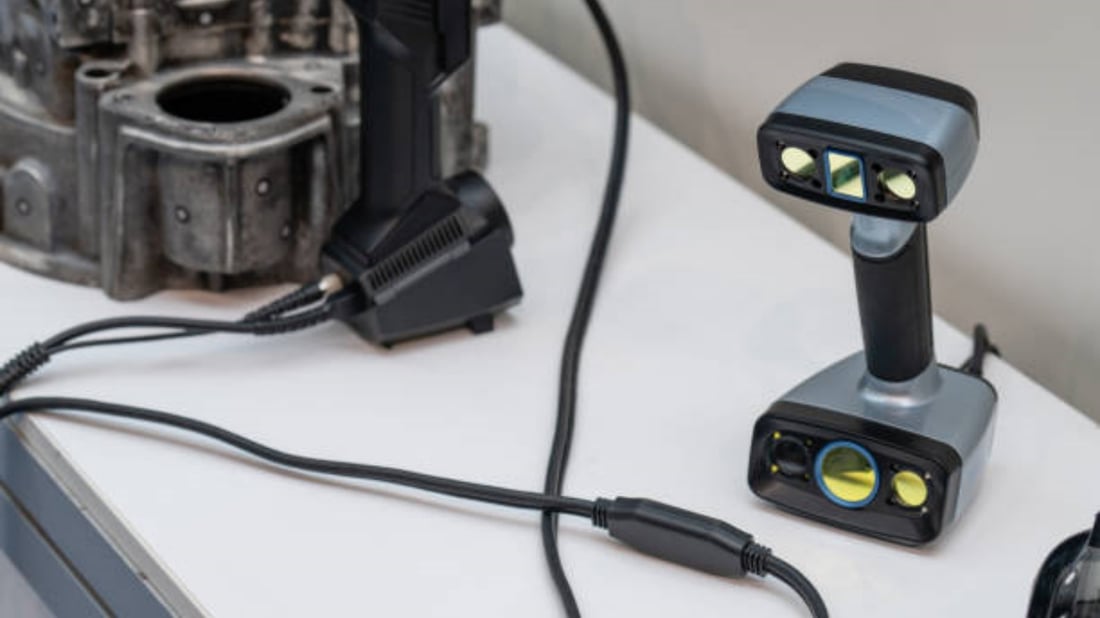
Non-contact 3D vibration measurement is an advanced technique used to analyze the dynamic behavior of structures and machinery without physical contact. Unlike traditional contact sensors, this method employs optical or laser-based technologies to capture three-dimensional vibration data, offering precise and comprehensive insights into mechanical performance. This innovation is crucial for industries requiring high accuracy and minimal interference during vibration analysis.
Core Technologies Driving Non-Contact 3D Vibration Measurement
Several cutting-edge technologies enable non-contact 3D vibration measurement, including laser Doppler vibrometry (LDV), digital image correlation (DIC), and optical interferometry. Laser Doppler vibrometry measures velocity and displacement by detecting frequency shifts in reflected laser beams, while DIC analyzes surface strain and displacement by correlating image patterns. These technologies provide high-resolution vibration data in all spatial directions, essential for thorough diagnostics.
Advantages Over Traditional Contact Vibration Sensors
The fundamental advantage of non-contact 3D vibration measurement is the elimination of sensor mass loading and mounting effects that skew data in contact-based methods. It enables the examination of delicate or moving parts without altering behavior, reduces wear on sensors, and allows measurements in hazardous or hard-to-reach environments. The 3D capability adds a comprehensive layer of data covering multiple axes, improving fault diagnostics.
Applications in Aerospace and Automotive Industries
In aerospace, non-contact 3D vibration measurement is critical for structural health monitoring of aircraft components, including wings and fuselage. Similarly, the automotive sector utilizes this method to monitor engine vibrations, optimize drivetrain components, and reduce noise, vibration, and harshness (NVH). These industries demand accuracy and non-invasiveness, making this technology indispensable for quality control and safety assurance.
Role in Predictive Maintenance and Condition Monitoring
Predictive maintenance programs benefit significantly from non-contact 3D vibration measurement by identifying early signs of wear, imbalance, or misalignment in rotating machinery. Continuous real-time monitoring enables precise interventions, reducing downtime and extending machinery lifespan. The ability to visualize vibration modes and amplitudes in three dimensions enhances diagnostic accuracy, supporting effective maintenance strategies.
Integration with Automated Inspection Systems
Non-contact 3D vibration measurement can be seamlessly integrated into automated inspection and robotic systems. This synergy allows for faster data acquisition and analysis without human intervention. Automated systems equipped with this technology can perform routine diagnostics on manufacturing lines, enabling quality assurance and minimizing production disruptions through early anomaly detection.
Challenges in Data Processing and Interpretation
While non-contact 3D vibration measurement produces rich data sets, it poses challenges in processing and interpretation. Advanced software and algorithms are required to filter noise, combine multi-axis signals, and visualize complex vibration modes. Machine learning and data analytics are increasingly employed to improve accuracy and assist engineers in extracting meaningful insights from the three-dimensional data.
Impact on Research and Development
Researchers rely on non-contact 3D vibration measurement to study material properties, dynamic responses, and failure mechanisms under various loading conditions. Its high spatial and temporal resolution facilitates fundamental research in structural dynamics and acoustics. The technique enables prototype testing and validation without physical interference, supporting innovation in product design and engineering.
Cost Considerations and Accessibility
Historically, non-contact 3D vibration measurement systems were expensive and limited to specialized labs. However, advances in sensor technology and computing power have reduced costs and improved accessibility for broader industrial applications. Though still an investment, the long-term benefits such as reduced maintenance costs and improved safety often justify the expenditure.
Future Trends and Emerging Developments
Future advancements in non-contact 3D vibration measurement are expected to focus on enhanced portability, wireless data transmission, and real-time analytics. Integration with Internet of Things (IoT) frameworks will enable predictive insights delivered directly to operational stakeholders. Additionally, improvements in sensor resolution and miniaturization will expand applications to micro- and nano-scale vibration analysis, pushing the boundaries of structural diagnostics.
Quote Inquiry
contact us