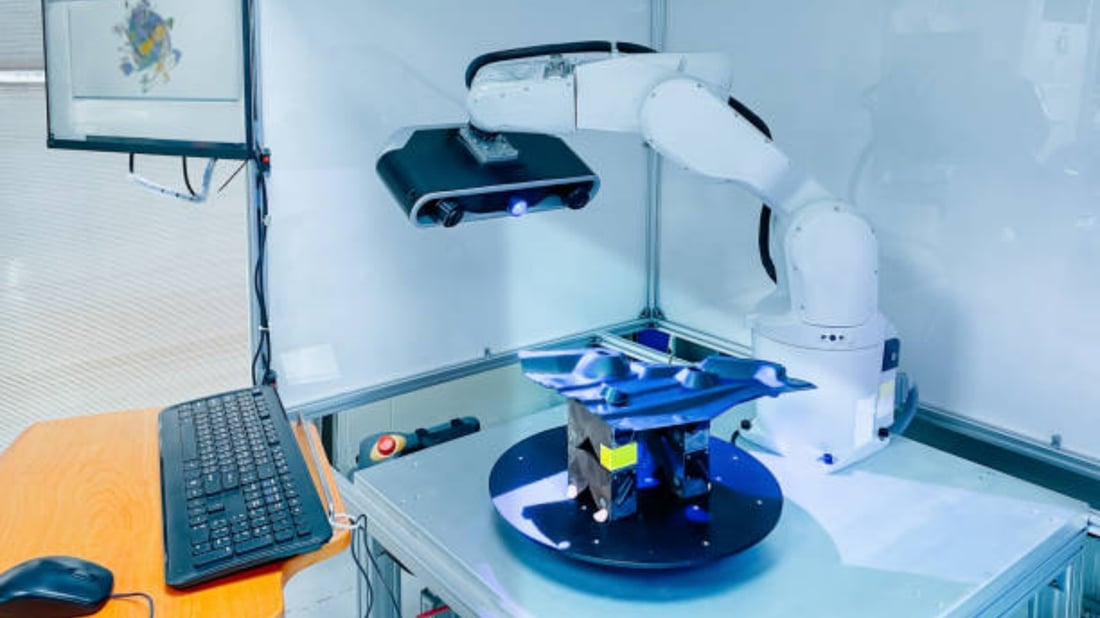
Optical 3D scanning vibrometer systems are advanced measurement tools designed to capture vibrational data on the surface of objects in three dimensions. Unlike traditional contact sensors, these systems use laser-based optics to detect minute vibrations without physical contact. This non-invasive approach enables precise and detailed vibration analysis critical in industries such as aerospace, automotive, and civil engineering. The ability to scan entire surfaces rapidly distinguishes optical 3D scanning vibrometer systems as essential for complex structural assessments.
Principle of Operation and Measurement Technology
At the core of an optical 3D scanning vibrometer system is laser Doppler vibrometry. The system emits laser beams that interact with vibrating surfaces, causing shifts in the reflected light’s frequency corresponding to the velocity of vibration. By scanning across multiple points in 3D coordinates, the vibrometer reconstructs a comprehensive map of vibrational modes and amplitudes. The integration of scanning mirrors and advanced optics enables systematic surface coverage, ensuring detailed vibration data acquisition without mechanical probes.
Applications in Aerospace Structural Health Monitoring
The aerospace industry benefits immensely from optical 3D scanning vibrometer systems for the non-destructive testing of aircraft structures. These systems identify resonant frequencies and detect early signs of material fatigue or defects by analyzing vibration patterns. Regular inspections using the vibrometer lead to improved safety and reliability, as engineers can pinpoint areas prone to failure before catastrophic breakdowns occur. Moreover, the ability to measure complex geometries and composite materials makes optical 3D scanning vibrometer systems indispensable in modern aircraft maintenance.
Advantages Over Traditional Vibration Measurement Methods
Compared to traditional accelerometers and contact sensors, optical 3D scanning vibrometer systems offer numerous advantages. Their non-contact nature eliminates mass loading effects that can alter vibration behavior. Additionally, these systems can reach areas that are difficult or dangerous for manual sensor placement. The high spatial resolution and rapid scanning capabilities provide a detailed and complete vibrational profile quickly. They also avoid wiring complexities and can operate in harsh environments without physical wear or degradation.
Role in Automotive Component Testing
In the automotive sector, optical 3D scanning vibrometer systems are used to analyze the dynamic behavior of engines, suspensions, and chassis components. Understanding vibration characteristics aids in noise, vibration, and harshness (NVH) optimization, enhancing ride comfort and vehicle durability. These systems enable engineers to create accurate models of vibrational sources and effects, allowing for more effective design modifications. The ability to scan complex curved surfaces makes them well-suited for modern vehicle geometries.
Integration with Finite Element Analysis (FEA)
Data from optical 3D scanning vibrometer systems can be integrated with Finite Element Analysis to validate computational models of vibrational behavior. The high-fidelity vibrational maps serve as empirical inputs for refining simulations, improving predictive accuracy. Engineers can correlate measured modal shapes and frequencies with FEA results to identify discrepancies and adjust material or boundary conditions accordingly. This synergy shortens development cycles and enhances the reliability of vibration-sensitive products.
Enhancements in Material Characterization
Optical 3D scanning vibrometer systems facilitate detailed material characterization by assessing how different materials respond to vibrational excitation. This information is vital for selecting materials with desirable damping properties or stiffness. By performing modal analysis on prototypes or components, researchers can compare vibrational signatures, detect internal flaws, and observe anisotropic material behaviors. These insights help in optimizing designs for improved performance and longevity.
Challenges and Limitations of the Technology
Despite their many benefits, optical 3D scanning vibrometer systems face certain challenges. Surface reflectivity and texture can affect the laser’s ability to capture accurate data, requiring surface preparation or coating in some cases. Environmental factors, such as ambient light and vibration noise, may also influence measurement fidelity. Furthermore, the complexity and cost of the equipment can limit accessibility in smaller or less-funded operations. Ongoing developments aim to mitigate these limitations and expand usability.
Recent Technological Innovations
Advancements in optical components and control algorithms have significantly enhanced optical 3D scanning vibrometer systems. High-speed scanning mirrors, improved laser stabilization, and sophisticated signal processing allow for faster and more accurate measurements. Some recent models incorporate multi-axis scanning to simultaneously capture vibrations along multiple directions, providing a more comprehensive data set. Integration with real-time monitoring software now enables quicker diagnostics and feedback for dynamic testing environments.
Future Prospects and Industry Impact
The future of optical 3D scanning vibrometer systems involves further miniaturization, automation, and integration with artificial intelligence for predictive maintenance and adaptive design feedback. As industries increasingly rely on condition monitoring and non-destructive testing, these systems will become central to quality assurance workflows. Growth in fields like robotics, renewable energy, and biomechanics also opens new applications, extending the impact of optical 3D scanning vibrometer systems beyond classical engineering domains.
Quote Inquiry
contact us