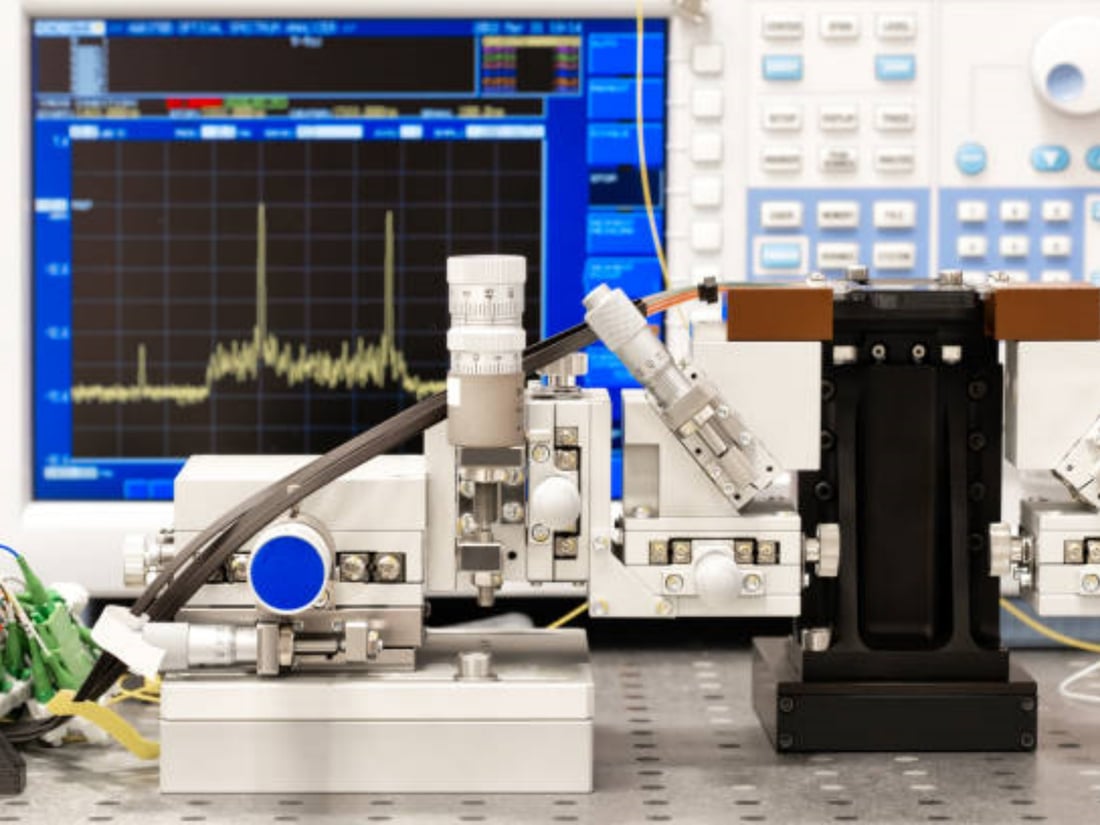
Full-field vibration analysis is a cutting-edge technique that captures and evaluates the vibration behavior of entire structures or systems simultaneously. Unlike traditional point-based vibration measurements, this method provides a comprehensive spatial map of vibrational responses, making it indispensable in advanced engineering diagnostics and research. Full-field vibration analysis enables engineers to observe how vibrations propagate across surfaces, identifying patterns that might be missed by localized measurements.
Technological Foundations of Full-Field Vibration Analysis
The core technology behind full-field vibration analysis often involves optical methods such as Digital Image Correlation (DIC), laser Doppler vibrometry, and electronic speckle pattern interferometry. These non-contact approaches capture high-resolution displacement or velocity data across an object's surface. The integration of high-speed cameras and sophisticated software allows for real-time and highly accurate acquisition of vibration data, transforming raw information into actionable insights.
Applications in Structural Health Monitoring
One of the primary applications of full-field vibration analysis lies in structural health monitoring (SHM). By mapping vibrational modes and frequencies throughout infrastructure such as bridges, buildings, and aircraft components, engineers can detect early signs of cracks, weaknesses, or fatigue. This early detection capability improves safety and optimizes maintenance efforts by pinpointing problem areas before catastrophic failures occur.
Advantages Over Traditional Vibration Measurement Techniques
Full-field vibration analysis offers several advantages compared to point-based sensors, such as accelerometers. It provides spatially continuous data without the need for physical sensor placement, reducing installation time and potential interference. Moreover, because it is non-contact and captures vibrations over large surfaces simultaneously, it provides richer data, enabling more comprehensive modal and harmonic analysis.
Implementation Challenges and Solutions
Despite its benefits, implementing full-field vibration analysis can pose challenges. High-speed imaging and data processing require significant computing resources and expertise. Environmental factors like lighting conditions and surface reflectivity can affect measurement accuracy. However, advancements in sensor technology, image processing algorithms, and calibration methods continue to mitigate these challenges, expanding the technology’s feasibility in diverse environments.
Role in Aerospace Engineering
In aerospace engineering, full-field vibration analysis is crucial for evaluating aircraft components subjected to complex dynamic loads. It helps detect resonance points, potential fatigue zones, and structural responses under operational conditions. This data enables designers to enhance material usage, optimize component geometries, and ensure compliance with stringent safety standards, contributing to overall flight safety and performance.
Contributions to Automotive Industry Innovations
The automotive sector leverages full-field vibration analysis to study vehicle chassis, engine assemblies, and suspension systems. Understanding how vibrations transfer and affect different parts allows manufacturers to reduce noise, vibrations, and harshness (NVH), improving ride comfort and durability. Additionally, the technique is applied in crash simulations and fatigue testing to refine vehicle safety features.
Impact on Materials Research and Development
Full-field vibration analysis plays a vital role in materials science by characterizing dynamic mechanical properties like stiffness, damping, and anisotropy. By observing how new composite materials or metamaterials respond to vibrations across their surfaces, researchers can tailor properties for specific applications. This accelerates innovation in fields ranging from civil engineering to biomedical devices.
Integration with Computational Modeling
Full-field vibration data complements and validates computational models such as finite element analysis (FEA). By comparing predicted vibrational modes with experimental results, engineers can refine model accuracy and adjust parameters to reflect real-world behaviors more closely. This iterative process enhances simulation reliability and supports predictive maintenance strategies.
Future Trends and Emerging Techniques
The future of full-field vibration analysis is poised for further advancement with the integration of artificial intelligence and machine learning. Automated pattern recognition and anomaly detection will enable faster and more precise diagnostics. Additionally, the development of portable and lower-cost optical sensors will broaden access to full-field vibration analysis, making it a standard tool across industries.
Quote Inquiry
contact us