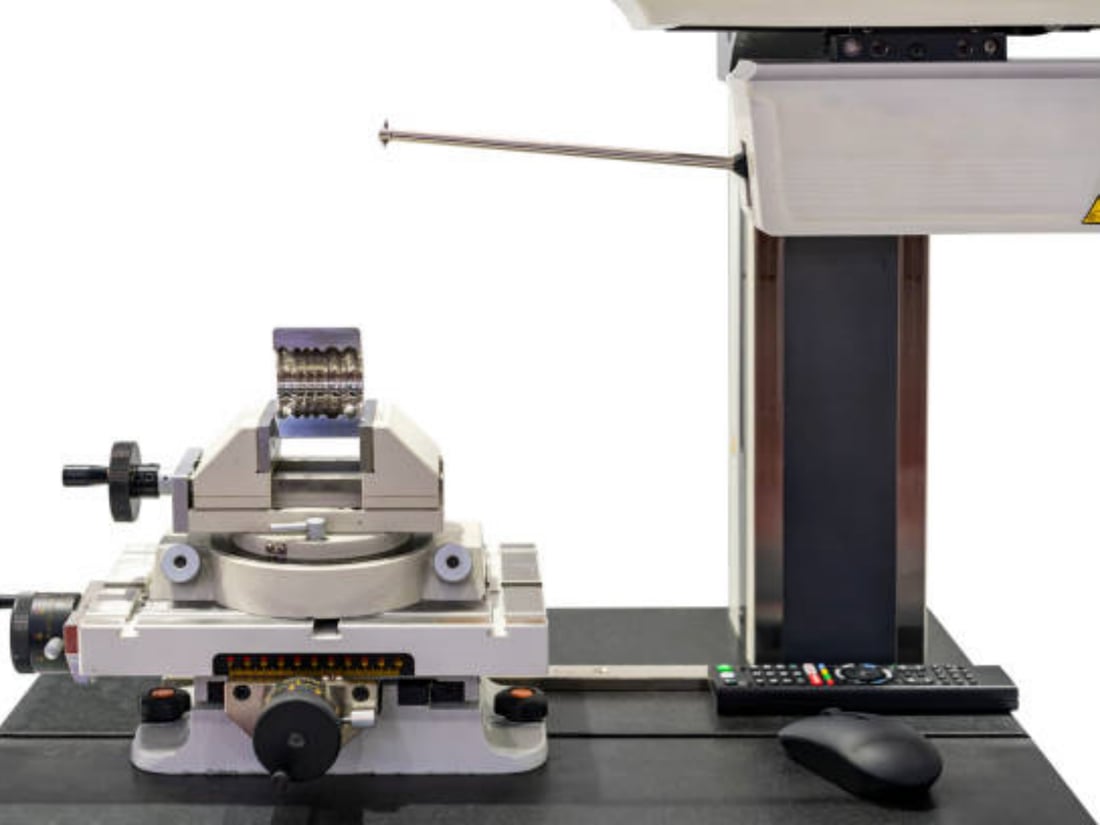
Optical Vibration Scanners have revolutionized the field of condition monitoring by providing accurate and non-contact measurement of vibrations in industrial machinery. These devices utilize advanced optical technology to detect vibration patterns, enabling effective predictive maintenance and reducing downtime. Understanding their functionality is paramount for industries aiming to optimize machine health diagnostics.
Working Principles of Optical Vibration Scanners
Employing laser-based or photonic sensing techniques, Optical Vibration Scanners capture displacement and velocity of vibrating surfaces without physical contact. By emitting a focused beam onto a target, reflected signals are analyzed to determine frequency and amplitude of vibrations. This approach minimizes measurement errors caused by mechanical interference, ensuring precision and reliability.
Advantages Over Traditional Vibration Sensors
Unlike contact sensors such as accelerometers, Optical Vibration Scanners offer non-intrusive operation, eliminating the risks of sensor wear and machinery disruption. Their ability to measure at a distance makes them ideal for high-temperature or hazardous environments. Additionally, these scanners provide rapid data acquisition, enhancing real-time monitoring capabilities.
Applications Across Industries
Optical Vibration Scanners find applications in a broad spectrum of industries including power generation, aerospace, automotive, and manufacturing. They are instrumental in monitoring turbines, compressors, engines, and rotating equipment where vibration analysis is crucial for maintaining optimal performance and avoiding catastrophic failures.
Integration with Condition Monitoring Systems
Modern Optical Vibration Scanners easily integrate with advanced condition monitoring platforms via standardized interfaces. This compatibility allows seamless data transfer, enabling comprehensive analysis through software tools. Integration facilitates predictive maintenance strategies by offering actionable insights based on vibration trends and anomalies.
Contribution to Predictive Maintenance Strategies
By accurately identifying early signs of mechanical wear or imbalance, Optical Vibration Scanners empower maintenance teams to schedule timely interventions. This predictive approach reduces unplanned outages, lowers maintenance costs, and extends equipment lifespan. The technology supports condition-based maintenance models widely adopted in Industry 4.0 environments.
Technological Innovations in Optical Vibration Scanning
Recent advancements have enhanced the sensitivity, range, and portability of Optical Vibration Scanners. Innovations such as fiber optic sensing and miniaturized components improve measurement accuracy even in complex operational settings. Integration with IoT and AI-driven analytics further amplifies their effectiveness in detecting subtle vibration irregularities.
Challenges and Limitations
Despite their benefits, Optical Vibration Scanners can be susceptible to environmental factors like dust, fog, or surface reflectivity issues that affect signal quality. Additionally, initial investment costs and the requirement for specialist knowledge to interpret data can pose hurdles for some organizations. Addressing these challenges is key to maximizing their utility.
Case Studies Demonstrating Effectiveness
Several industrial case studies highlight the value of Optical Vibration Scanners in early fault detection and reliability improvement. For instance, power plants employing these scanners reported a significant reduction in unexpected turbine failures. Such evidence underscores their role in safeguarding critical assets and optimizing operational efficiency.
Future Trends in Optical Vibration Scanner Development
Looking forward, the evolution of Optical Vibration Scanners is set to focus on enhanced real-time analytics, wireless connectivity, and miniaturization. Integration with machine learning algorithms will facilitate autonomous fault diagnosis and self-correcting maintenance systems. These trends promise to further embed optical vibration sensing into smart manufacturing and digital twin technologies.
Quote Inquiry
contact us